
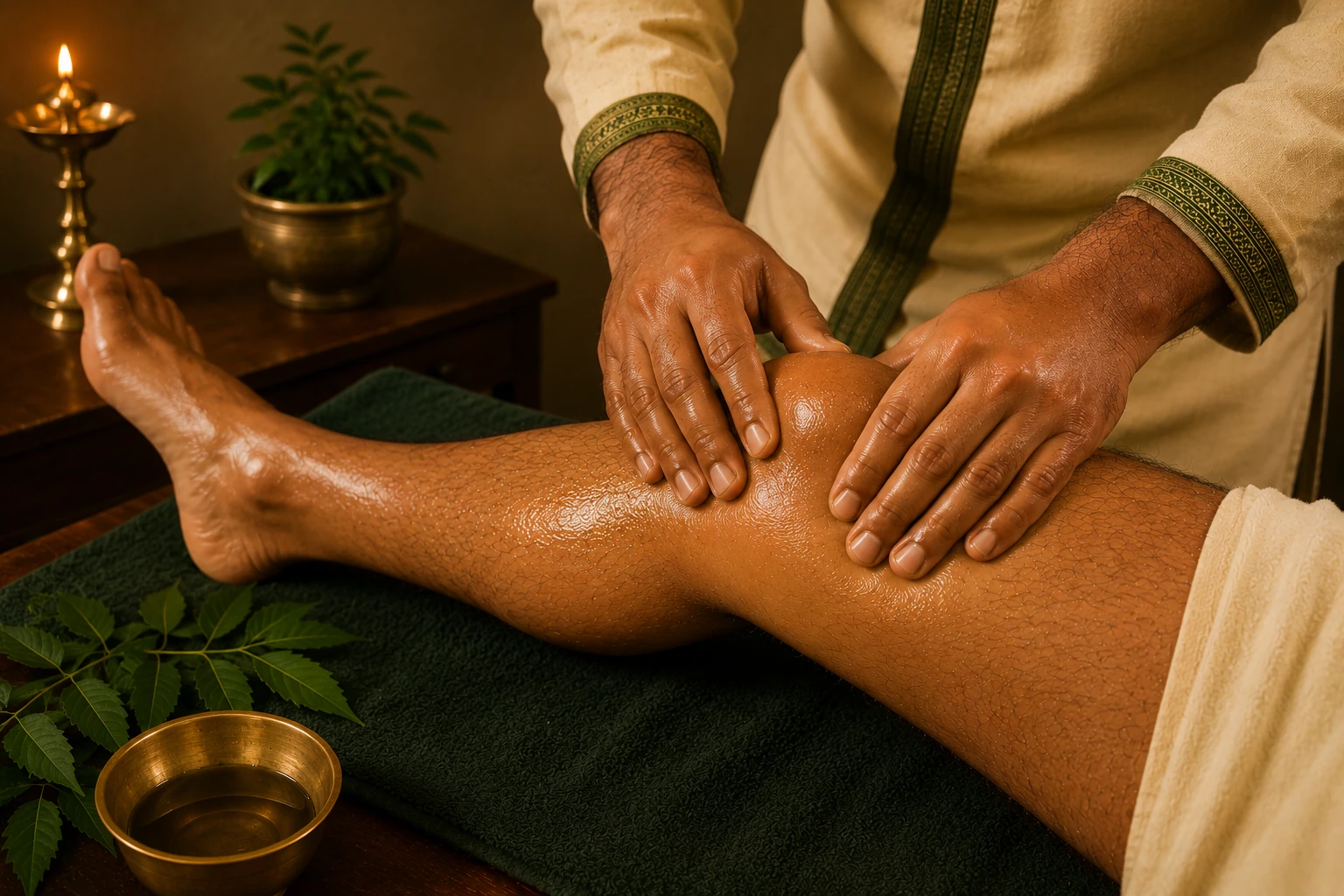
If you've undergone Ayurvedic treatment for knee pain in Trivandrum, congratulations — you've taken a holistic step toward healing. Whether your therapy included Janu Basti, Pizhichil, Abhyanga, or a full Panchakarma programme, Ayurveda doesn't just aim to relieve symptoms; it restores balance to the entire body.
However, recovery doesn't end when treatment finishes. In Ayurveda, aftercare is just as important as the treatment itself for retaining joint health and preventing future problems. Here's how to protect and strengthen your knees after your Ayurvedic experience in Trivandrum.
1. Follow a Joint-Friendly Daily Routine (Dinacharya)
Your body needs time to settle into the benefits of treatment. A simple, consistent lifestyle helps keep Vata dosha in balance, since Vata is primarily responsible for joint health.
Key Practices
- Wake up and sleep at consistent times
- Avoid excessive cold, damp environments
- Apply warm sesame oil to your knees daily (self-Abhyanga)
- Practice gentle yoga or stretching in the morning
2. Adopt a Knee-Supportive Diet
Ayurveda treats food as medicine. The right diet can help reduce inflammation, nourish cartilage and keep your joints lubricated.
Eat
- Warm, cooked meals rich in ghee, turmeric and ginger
- Foods high in omega-3s, like flaxseeds and walnuts
- Leafy greens, whole grains and moong dal
Avoid
- Processed, fried or packaged foods
- Excessively cold drinks or ice
- Heavy red meats or dairy if difficult to digest
3. Continue Gentle Exercise and Movement
After Ayurvedic treatment for knee pain, both rest and movement matter. High-impact activities that could aggravate the knee are best avoided.
Recommended
- 20 to 30 minutes of walking on level surfaces each day
- Yoga poses for knee health: Tadasana, Setu Bandhasana and Vajrasana
- Simple Pranayama (breathing exercises) to improve circulation and reduce joint stress
4. Use Ayurvedic Supplements and Oils as Advised
Many Ayurvedic doctors in Trivandrum prescribe herbal supplements or medicated oils after treatment to support healing. These may include:
- Dashamoolarishtam (anti-inflammatory tonic)
- Guggulu-based tablets (for joint strength)
- Mahanarayan or Sahacharadi Thailam (for continued oil massage)
Always use only what your Ayurvedic doctor recommends — Ayurveda is highly personalised, and what helps one person may not suit another.
5. Schedule Regular Follow-Up Treatments or Abhyanga
Knee care is an ongoing process. Many clinics in Trivandrum offer monthly or seasonal maintenance treatments, such as:
- Warm oil massages (Abhyanga)
- Steam therapy (Swedana)
- Mild detox (Langhana or Rasayana programmes)
Even two or three sessions every few months can help prevent the recurrence of pain or stiffness.
6. Avoid Overuse or Stress to the Joints
It's easy to slip back into old habits — but your knees still need protection and moderation.
Tips
- Use a stool or cushion when sitting for long periods
- Avoid squatting or climbing stairs too often
- Wear comfortable, supportive footwear
- Stay hydrated to keep the synovial fluid in your joints healthy
7. Mind-Body Connection: Reduce Stress
Stress aggravates Vata, which can directly affect joint health. Incorporate Ayurvedic stress-management techniques into your routine:
- Meditation or mindfulness daily
- Herbal teas with ashwagandha or Brahmi
- Evening oil massage and a warm bath for relaxation
Final Thoughts
Your journey to pain-free knees doesn't end at the clinic — it continues at home, every day. With the right mix of Ayurvedic diet, lifestyle and follow-up care, you can maintain strong, flexible, pain-free knees for years to come.
Whether you received care at a leading Ayurvedic treatment center in Trivandrum or a local clinic, the ancient science of Ayurveda empowers you to take long-term control of your joint health naturally.