
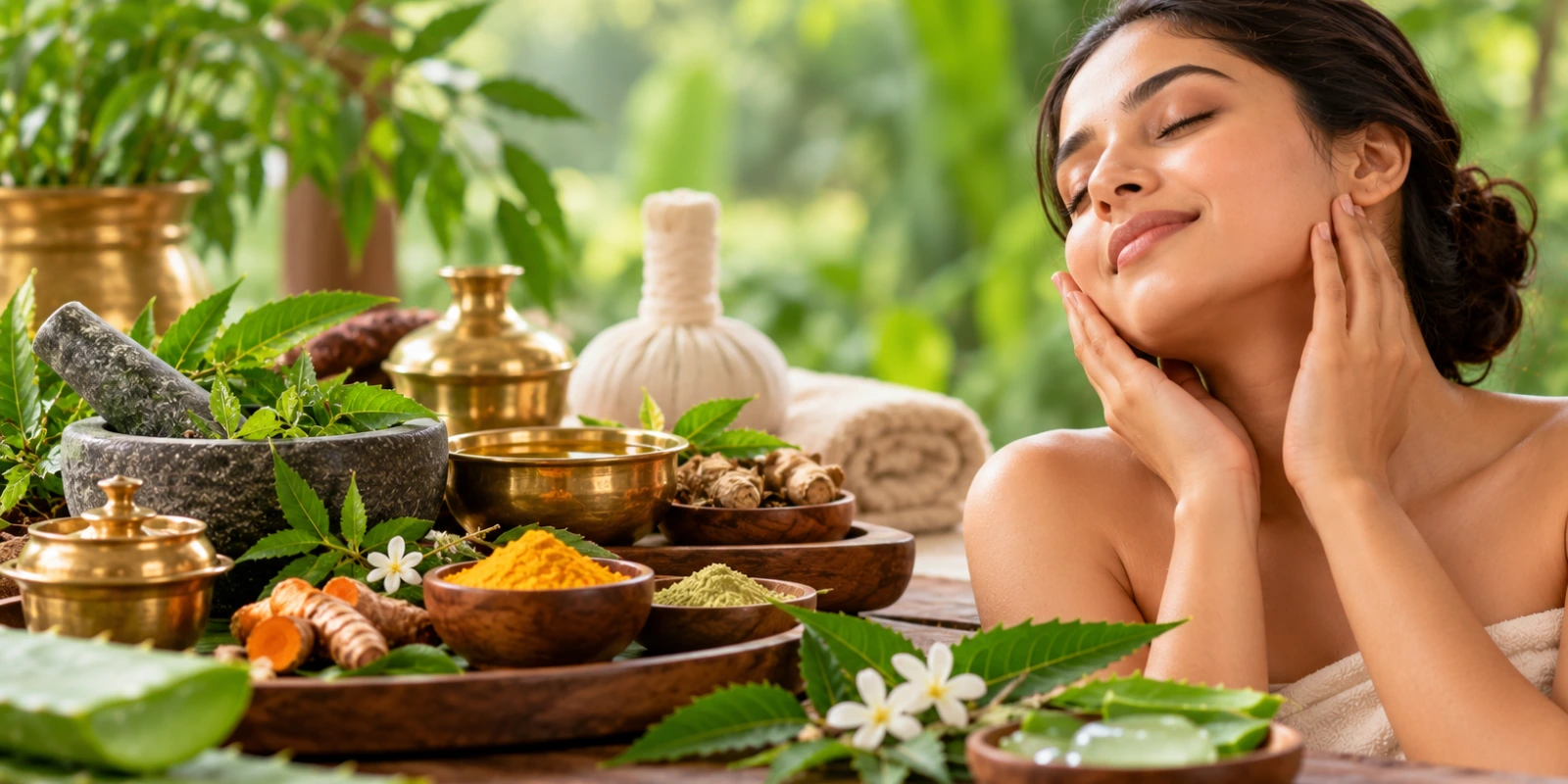
Skin conditions have a frustrating habit of returning. A cream clears up a rash, and weeks later it's back, sometimes worse, sometimes in a new spot. If you've cycled through steroid creams and antihistamines without lasting change, you've probably started looking into ayurveda treatment for skin disease as a different route, one that treats the skin as a reflection of what's happening inside the body rather than an isolated surface problem.
That distinction is central to how Ayurveda approaches chronic skin issues, and it's why the results tend to last longer than symptom-only suppression.
How Ayurveda Understands Skin Disease
In Ayurvedic terms, skin is governed largely by Pitta dosha (heat and inflammation) and closely tied to blood tissue (Rakta Dhatu). Most chronic skin conditions, eczema, psoriasis, acne, allergic rashes, hives, stem from aggravated Pitta combined with accumulated Ama (toxins) that the body pushes out through the skin when internal channels are congested.
This is why ayurveda treatment for skin disease rarely starts and ends with a topical application. A cream can calm the surface, but if Pitta remains aggravated and Ama keeps accumulating, the condition resurfaces, often triggered by diet, stress, weather, or hormonal shifts.
Common Skin Conditions Treated
| Condition | Ayurvedic View | Primary Focus |
|---|---|---|
| Eczema / Atopic Dermatitis | Pitta-Kapha imbalance with Ama accumulation | Detoxification, blood purification |
| Psoriasis | Deep-seated Pitta and Vata imbalance affecting skin layers | Long-term internal correction, external soothing therapy |
| Acne | Pitta aggravation combined with poor digestion | Diet correction, blood purification |
| Allergic Rashes / Hives | Acute Pitta flare, often diet or environment triggered | Rapid Pitta pacification, trigger identification |
| Fungal Infections | Kapha-Ama accumulation in warm, moist conditions | Dryness-promoting therapy, hygiene correction |
Ayurvedic Therapies for Skin Disease
A structured ayurveda treatment for skin disease plan typically combines external, skin-directed therapies with internal detoxification and herbal medicine.
| Therapy | What It Does | Typical Duration |
|---|---|---|
| Lepa (Herbal Paste Application) | Localized relief from itching, inflammation, and rashes | 20–30 mins/session |
| Takradhara | Cooling, Pitta-pacifying therapy using medicated buttermilk | 30–45 mins/session |
| Udvartana (Herbal Powder Massage) | Supports lymphatic drainage and exfoliation | 30–40 mins/session |
| Virechana (Therapeutic Purgation) | Deep Pitta and blood-toxin elimination for chronic cases | Course-based, supervised |
| Raktamokshana (Blood-letting Therapy) | Used selectively for stubborn, recurring skin eruptions | Single or limited sessions |
Mild, recent skin issues often respond to 2–3 weeks of external therapy and diet correction, while chronic conditions like psoriasis or long-standing eczema typically need a longer, detox-inclusive course of 4–6 weeks.
Herbal Support Commonly Used
- Neem-based formulations — widely used for blood purification and antimicrobial support
- Manjistha (Rubia cordifolia) — a classical herb for skin clarity and Pitta pacification
- Haridra Khanda — a turmeric-based formulation for inflammation and allergic skin reactions
- Khadirarishta — an internal tonic traditionally used for chronic skin conditions
- Aravindasava — supports skin tone and reduces Pitta-related eruptions
As with any internal formulation, dosage and combination should be determined by a qualified Ayurvedic physician based on your specific skin condition and constitution.
Best Ayurvedic Medicine for Allergy: Where Skin Disease Often Overlaps
A significant share of chronic skin disease cases are allergic in origin, a reaction to food, environment, or contact triggers that manifests as rashes, hives, or persistent itching. This is why patients researching ayurveda treatment for skin disease frequently also look into the best ayurvedic medicine for allergy, since the two conditions often share the same root cause: aggravated Pitta and accumulated Ama triggering a hypersensitive response.
Formulations like Haridra Khanda and Guduchi, commonly cited as the best ayurvedic medicine for allergy, are equally relevant for allergic skin presentations, which is why a thorough consultation looks at both digestive health and allergic history, not just the visible rash, before finalizing a treatment plan.
Diet and Lifestyle for Clearer Skin
- Reduce Pitta-aggravating foods, spicy, fried, and excessively sour or fermented items
- Favour cooling, lightly-spiced meals with bitter greens, which Ayurveda considers blood-purifying
- Stay well hydrated, and avoid excessive caffeine or alcohol, both of which aggravate Pitta
- Identify and track personal trigger foods, common culprits include dairy, nuts, and certain seafood for sensitive individuals
- Avoid excessive sun exposure during flare-ups, and use natural, non-irritating skincare
- Manage stress through Pranayama or meditation, since stress is a well-documented Pitta aggravator
Why the Same Rash Can Have Different Root Causes
It's worth noting that visually similar skin eruptions can stem from entirely different internal imbalances, a rash triggered by a food allergy looks very different in origin from one caused by chronic digestive weakness, even though both may appear as redness and itching on the skin. This is precisely why self-diagnosing and self-treating skin disease with generic over-the-counter remedies so often disappoints: the treatment matches the visible symptom, not the underlying cause.
A proper assessment for ayurveda treatment for skin disease looks beyond the rash itself, asking about digestion, stress, sleep, and dietary patterns, to identify whether Pitta aggravation, Ama accumulation, or an allergic trigger (or some combination of the three) is driving the condition. Only once this is clear can a treatment plan genuinely target the cause rather than just the appearance.
What Makes a Dedicated Ayurveda Wellness Clinic Different
A generic skincare product addresses the surface; a proper ayurveda wellness clinic addresses the cause. At a dedicated ayurveda wellness clinic like Kayakalpa, skin disease treatment begins with a detailed consultation, digestive health, stress levels, dietary habits, and the history and pattern of flare-ups, before any therapy or herbal formulation is prescribed.
This diagnostic step matters because two patients with the same visible rash may need entirely different treatment paths depending on whether Pitta, Kapha, or an allergic trigger is the dominant factor. It's this individualized approach that a one-size-fits-all cream or a quick clinic visit typically can't offer.
How Your Treatment Plan Is Personalized
Two patients with near-identical rashes can need very different treatment paths, which is why generic skincare advice so often falls short. At Kayakalpa, ayurveda treatment for skin disease begins with a detailed consultation covering digestive health, stress patterns, known allergies, diet, and the history of your flare-ups, how long they've persisted, what seems to trigger them, and whether they're seasonal or constant.
This assessment determines the treatment path. A patient with an acute, allergy-triggered rash may need rapid Pitta-pacifying therapy and trigger-food identification, while someone with long-standing eczema or psoriasis typically needs a longer course that includes internal detoxification like Virechana. Herbal formulations are similarly adjusted, a Pitta-dominant constitution often needs stronger cooling support than a Kapha-Pitta combination type.
This individualized diagnosis is also why switching between over-the-counter creams rarely resolves chronic skin disease; without identifying the underlying dosha imbalance and trigger pattern, treatment tends to manage symptoms rather than resolve them.
Preventing Flare-Ups After Treatment
Once ayurveda treatment for skin disease has cleared a flare-up, a few ongoing habits help keep skin calm long-term:
- Continue avoiding identified trigger foods even after symptoms resolve, rather than reintroducing them immediately
- Maintain a Pitta-balanced diet, especially during seasonal transitions when flare-ups tend to recur
- Keep stress levels in check through regular Pranayama or a consistent daily routine
- Use gentle, natural skincare rather than reverting to harsh or heavily fragranced products
- Schedule a periodic follow-up consultation, especially before high-risk seasons like summer or monsoon, when Pitta and Kapha imbalances are more common
These habits are often what distinguishes a lasting recovery from a cycle of recurring flare-ups every few months.
Myths vs. Facts About Ayurvedic Skin Treatment
What to Expect: A Typical Recovery Timeline
1–2
Itching and Inflammation Ease
Reduced itching and inflammation with Lepa and Takradhara therapy.
3–4
Skin Texture Improves
Noticeable improvement in rash frequency and skin texture, alongside dietary correction.
5–6
Deeper Detox Results
For chronic cases, internal detox therapies like Virechana begin showing deeper, longer-lasting results.
6+
Maintenance Phase
Maintenance herbal support and diet discipline consolidate the improvement and reduce flare-up frequency.
The Role of Gut Health in Skin Clarity
Ayurveda has long held a view that modern research is increasingly echoing, that skin health is closely tied to digestive function. When Agni (digestive fire) is weak, undigested food contributes directly to Ama formation, which Ayurveda considers a primary driver of chronic skin eruptions. This is why ayurveda treatment for skin disease so often includes digestive support alongside skin-directed therapy, even when the presenting complaint is purely visible on the surface.
Patients are sometimes surprised that their skin consultation includes detailed questions about bowel regularity, bloating, and appetite, but these digestive patterns frequently hold the key to why a particular treatment combination will or won't work for their specific case.
When to See a Doctor First
- Rapidly spreading rash accompanied by fever
- Signs of infection, pus, warmth, or significant swelling
- Severe allergic reactions affecting breathing or facial swelling
- Skin lesions that don't respond to any treatment after several weeks
Conclusion
Recurring skin problems are often the body's way of signalling an internal imbalance that topical treatment alone can't resolve. Ayurveda treatment for skin disease works by correcting that imbalance, through herbal medicine, detoxification, and diet, offering a path to clearer skin that holds rather than one that fades the moment treatment stops.
Ready to address your skin condition at the root?
Frequently Asked Questions
Mild cases often improve within 2–3 weeks, while chronic conditions may take 4–6 weeks or longer.
Yes, both are commonly treated through a combination of internal detox therapy and external Pitta-pacifying treatments.
Yes, diet correction is considered essential alongside herbal and external therapy for lasting results.
Formulations like Haridra Khanda and Guduchi are commonly used, prescribed based on individual assessment.
Yes, when prescribed by a qualified physician after assessing your specific skin type and condition.
Yes, stress is a well-recognized Pitta aggravator and a common trigger for flare-ups.
No, it's generally reserved for chronic or deep-seated cases rather than mild, recent skin issues.
An ayurveda wellness clinic focuses on identifying and correcting the internal root cause, not just managing visible symptoms.
This should be discussed with both practitioners, as combining treatments needs professional coordination.
Recurrence is significantly reduced when diet and lifestyle correction continue even after visible symptoms clear.