
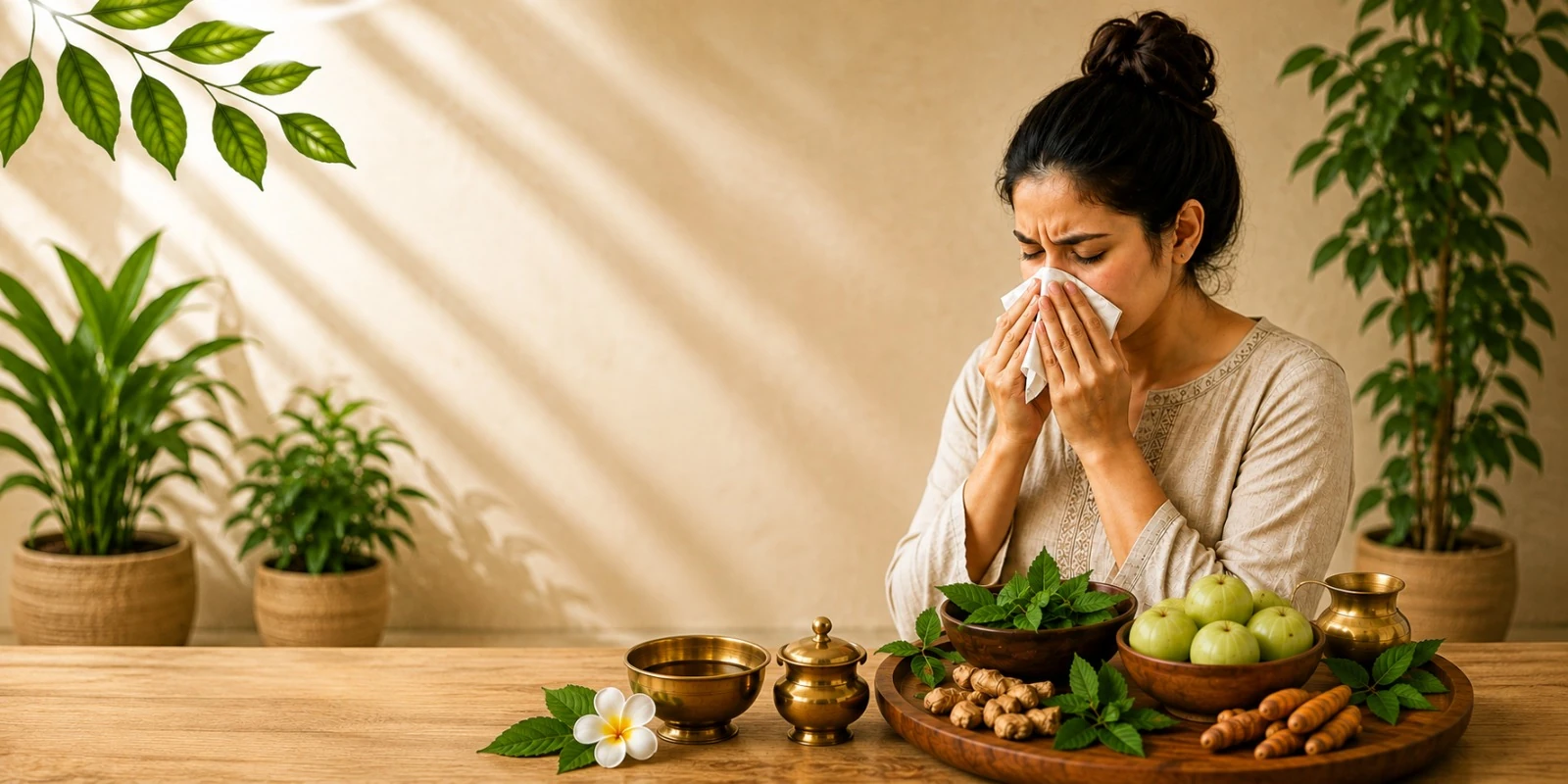
Allergy season has a way of turning into a monthly routine — sneezing, taking an antihistamine, feeling groggy for a few hours, and repeating next month. That cycle is usually what sends people looking for the best ayurvedic medicine for allergy relief. Not because they want something slower, but because they're tired of managing the symptom without ever touching whatever's actually causing it.
Why Do Allergies Keep Coming Back, According to Ayurveda?
Ayurveda links allergic reactions to weak digestion and a buildup of toxins (ama) that throw your doshas off balance — usually pitta and kapha. When digestion (agni) is weak, undigested food residue turns into ama, which circulates through the body and leaves your immune system oversensitive to things like dust, pollen, certain foods, or a change in season.
This is actually a decent explanation for something conventional medicine doesn't really address: why the same trigger wrecks one person and barely touches another. It's not just about exposure — it's about how much ama has built up and how imbalanced the doshas already are. Someone with strong digestion and balanced doshas can walk through the same dusty room and feel nothing, while someone with weak agni and excess kapha reacts within minutes.
There's also a pattern to how the allergy shows up. Kapha-type imbalances tend to show up as congestion, mucus, and respiratory symptoms. Pitta-type ones lean more toward skin reactions, rashes, and inflammation. That distinction actually matters, because the herbs and therapies used differ depending on which pattern you're dealing with.
So What Is the Best Ayurvedic Medicine for Allergy Symptoms?
Honestly, there isn't one single answer here — Ayurveda prescribes based on your dosha and the type of allergy, not a blanket remedy for everyone. But a handful of herbs come up again and again in allergy treatment:
| Herb / Remedy | Commonly used for |
|---|---|
| Turmeric (Haridra) | Reducing inflammation and histamine response |
| Guduchi (Giloy) | Supporting immune balance and reducing hypersensitivity |
| Licorice (Yashtimadhu) | Respiratory and skin allergy symptoms |
| Neem | Skin allergies, rashes, and itching |
| Triphala | Clearing digestive toxins linked to recurring allergies |
| Nasya (nasal oil therapy) | Seasonal and dust-related nasal allergies |
| Trikatu | Stimulating digestion to reduce ama buildup |
| Pippali | Supporting respiratory function during seasonal flare-ups |
Think of this as a list of what's commonly prescribed, not a self-treatment guide. The right herb, combination, and dose depends on your dosha, the type of allergy, and anything else going on with your health — which is exactly why this needs a qualified practitioner rather than a quick pick off a table.
Worth saying plainly: these aren't a faster-acting swap for an antihistamine mid-reaction, and "natural" doesn't mean "take it however you like." Herbs affect the body the same way any medicine does — mixing them badly, or alongside existing prescriptions, can do more harm than good.
How Does an Ayurvedic Wellness Centre Treat Allergies Differently From a Pharmacy Counter?
An antihistamine blocks histamine receptors for a few hours — that's why the relief vanishes the moment it wears off. An ayurvedic wellness centre takes the longer view instead, focusing on:
- Digestive strength (agni) — since weak digestion is often the actual driver behind the hypersensitivity, strengthening it is usually step one
- Dosha assessment — figuring out which dosha is off, so the herbs and therapies actually match your constitution instead of a generic protocol
- Detox therapies — Panchakarma and similar cleansing work aimed at clearing the ama behind repeated flare-ups
- Diet adjustments — cutting the foods that aggravate your specific imbalance, adding in what supports digestion and immunity
- Daily routine (dinacharya) — consistent sleep, meal timing, and activity that build the body's resistance over time
The point isn't symptom control for the afternoon you visit. It's fewer flare-ups over the months after, and less dependency on daily medication once allergy season hits. That's a different measure of success than what a spa or a pharmacy is working toward.
Can Ayurveda Actually Cure Allergies for Good?
Not in a one-time, guaranteed way — especially with genetic predispositions or more severe cases that need ongoing medical management. Be skeptical of anyone, in any system of medicine, promising a permanent cure for allergies.
What's realistic is a noticeable drop in how often and how badly you flare up, once the underlying imbalance is treated consistently alongside diet and lifestyle changes. Plenty of people go from reacting to every seasonal shift to only reacting occasionally, or from severe flare-ups to mild ones that clear up faster. That's a meaningful result, even if it's not a permanent fix — and it usually takes weeks or months of steady treatment, not one visit.
What Lifestyle Changes Actually Support the Treatment?
Herbal medicine on its own rarely holds up without matching changes to diet and daily habits. What practitioners tend to bring up:
- Eating warm, freshly cooked meals instead of cold, raw, or processed food, since that's believed to aggravate kapha and burden digestion
- Cutting known dietary triggers — dairy or fried food for kapha-type allergies, spicy or fermented food for pitta-type ones
- Sticking to a consistent daily routine (dinacharya) to keep digestion steady and stop ama from building up
- Managing dust and allergens at home — basics like clean bedding and avoiding damp, mould-prone corners
- Regular detox or seasonal cleansing, ideally around the times of year your allergies tend to spike
- Bringing stress down — Ayurveda ties elevated stress to aggravated pitta and vata, which worsens allergic sensitivity
None of this replaces an actual consultation, but it explains why ayurvedic allergy treatment often looks less like "take this pill" and more like a broader shift in how you eat, sleep, and manage your surroundings.
Why This Takes Longer Than a Tablet — and Why That's the Whole Point
Might as well be upfront about the trade-off. If you need relief from a sneezing fit in the next twenty minutes, an antihistamine wins that race every time. What Ayurveda offers instead is a slower path toward needing that tablet less often in the first place. For anyone who's been managing allergies with daily medication for years, with the sensitivity itself never actually improving, that's usually the exact gap they're trying to close.
It's also why this is rarely a one-visit fix. Clearing ama, correcting a long-standing dosha imbalance, and rebuilding digestive strength takes sustained effort, not a single appointment. Go in expecting instant, dramatic results and you'll probably be disappointed. Stick with a structured plan over a few months, though, and most people do see a real, lasting change in how often — and how badly — they react.
Frequently Asked Questions
Common options include turmeric, guduchi, and licorice, but the right one depends on your dosha and should be prescribed by a practitioner.
Yes, therapies like Nasya and kapha-balancing herbs are commonly used for seasonal and dust-related allergies.
It's best to check with a practitioner first, since some herbs can interact with conventional medication.
Most people notice gradual improvement over a few weeks, since it's working on the root cause rather than instant relief.
Yes, skin allergies are commonly treated with herbs like neem alongside dietary and detox guidance.
Weak digestion and toxin buildup (ama), which keeps the immune system oversensitive.
Yes, a consultation identifies your dosha imbalance so the herbs actually match your condition.
Diet plays a big role, but it usually works best paired with herbal medicine and therapy rather than alone.
Uncommon when prescribed correctly by a qualified practitioner, but self-medicating with herbs isn't recommended.
Panchakarma is the most common one, used to clear the toxin buildup linked to recurring allergic reactions.