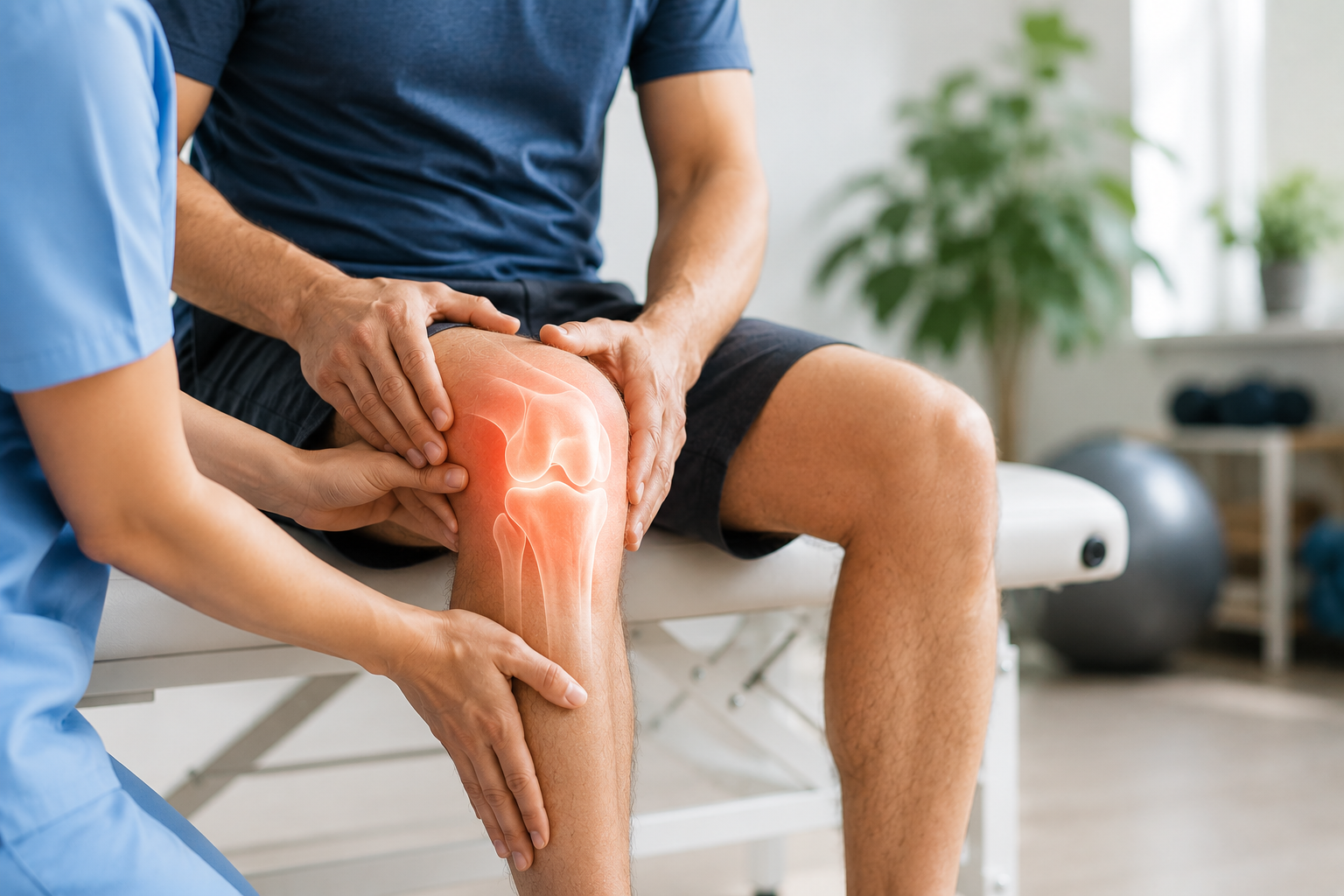
Knee pain treatment in Ayurveda addresses joint pain by combining external therapies — medicated oil massage, herbal fomentation and localised steam — with internal medication and lifestyle correction aimed at reducing the vata imbalance that Ayurveda identifies as the root cause behind most joint degeneration. At Kayakalpa in Trivandrum, this is one of our most requested programmes, alongside our long-running Ayurvedic treatment for back pain.
Unlike a single massage session, knee pain treatment is structured as a short programme, because joint tissue responds to sustained, repeated therapy rather than one-off relief.
Why Ayurveda Treats Knee Pain Differently
In conventional care, knee pain is often treated as an inflammatory process to be suppressed. Ayurveda reads the same symptom as a sign of vitiated vata dosha — the energy responsible for movement and joint lubrication — together with reduced shleshaka kapha, the substance that cushions the joint. The goal of therapy is not only pain relief but the eventual restoration of the joint's own lubrication and mobility.
Common Causes of Knee Pain We See
- Age-related cartilage wear (osteoarthritis)
- Old sports or accident injuries that never fully healed
- Prolonged standing or joint overuse from occupation
- Obesity-related joint stress
- Vata imbalance from irregular routine, cold exposure, or excess dry food
Core Therapies for Knee Pain Treatment in Ayurveda
Janu Basti is the signature therapy for knee-specific pain and is almost always the core of the programme.
| Therapy | What it does | Typical duration |
|---|---|---|
| Janu Basti | Warm medicated oil pooled and retained over the knee joint using a dough ring | 30–45 min/session, 7 days |
| Abhyanga | Full-leg medicated oil massage to improve circulation around the joint | 30–40 min/session |
| Patra Pinda Sweda | Herbal leaf poultice fomentation to reduce stiffness and inflammation | 30–40 min/session |
| Elakizhi / Choorna Pinda Sweda | Heated herbal bolus massage for deep-tissue relief | 30 min/session |
| Internal medication | Herbal anti-inflammatory and joint-nourishing formulations | Ongoing, physician-prescribed |
Typical Treatment Timeline
Consultation & diagnosis
The physician assesses dosha imbalance, joint condition, and any prior injury or imaging reports.
Janu Basti course
Daily sessions of medicated oil retention therapy on the affected knee(s), alongside supporting therapies — Patra Pinda Sweda or Choorna Pinda Sweda — alternated based on inflammation levels.
Internal medication & lifestyle plan
Continued herbal medication with dietary and movement guidance for maintenance.
Most clients report noticeable stiffness reduction by day 4–5, though full programme completion is what determines lasting results.
Ayurveda vs. Conventional Knee Pain Treatment
| Aspect | Ayurvedic treatment | Conventional treatment |
|---|---|---|
| Primary approach | Root-cause correction (dosha balance, tissue nourishment) | Symptom management (painkillers, anti-inflammatories) |
| Invasiveness | Non-invasive | Ranges from oral medication to surgery |
| Typical timeline | 7–14 day structured programme | Ongoing medication or one-time procedure |
| Addresses mobility | Yes, directly through oil therapy and movement | Indirectly, via physiotherapy add-on |
| Best suited for | Early-to-moderate osteoarthritis, chronic stiffness, post-injury recovery | Severe structural damage, acute fractures |
Ayurvedic treatment works best as an early-to-moderate stage intervention, or as a complementary programme alongside physiotherapy — for severe structural damage it should be pursued alongside, not instead of, orthopedic evaluation.
Is Ayurvedic Knee Treatment Right for You?
Good candidates typically have:
- Chronic knee stiffness lasting more than 4–6 weeks
- Diagnosed early or moderate osteoarthritis
- Pain that worsens in cold or damp weather (a classic vata sign)
- A preference for non-invasive, non-pharmaceutical management
- Recovered from injury but left with residual stiffness
If you're also managing pain elsewhere — many of our knee pain clients also ask about Ayurvedic treatment for neck pain or general joint care — mention it during consultation so your programme can address both.
What to Expect After the Programme
- Reduced morning stiffness within the first week
- Improved range of motion, particularly in bending and stair use
- A personalised maintenance plan — usually a monthly follow-up massage and seasonal internal medication
- Dietary guidance to reduce vata aggravation (warm, cooked, lightly oiled foods)
Frequently Asked Questions
Most programmes run 7–14 days, with noticeable improvement usually by day 4–5.
No — it's a soothing, warming oil retention therapy, not an invasive procedure.
It helps significantly with symptoms and slows progression, but severe structural arthritis may still need conventional management alongside it.
It includes specific joint therapies like Janu Basti and internal medication, not just general body massage.
Yes, it's often used for elderly patients, with dosage and intensity titrated by physician assessment.
Only under medical supervision — never stop prescribed medication without consulting your doctor.
Most clients feel less stiff by the 4th or 5th session.
Yes, it's commonly used for residual stiffness and incomplete recovery following knee injuries.
Yes — warm, lightly oiled, easily digestible food supports the anti-vata action of the therapies.
In chronic cases, a seasonal refresher roughly every 6 months is usually advised.